top of page


Editor’s introduction
ow much do our families shape who we become? In this issue, our contributors explore everything from parenthood, upbringing and education to declining birth rates, compassionate parenting and lifelong learning. Together, they show that while our relationships and culture help form us, we all have the capacity to reflect, grow and shape our own future.

David Warden
Jul 312 min read


Andy Burnham’s Brilliant Bus
Cartoon created by ChatGPT from a prompt by David Warden. Can you spot the anatomical error? Free bus ride for the first correct answer! Andy Burnham became Prime Minister of the United Kingdom on 20 July 2026, succeeding Keir Starmer to become the UK’s 59th holder of the office. Before entering Downing Street, he served as Mayor of Greater Manchester, where he won praise for bringing the region’s buses back under public control. He has also been closely associated with effor
David Warden
Jul 311 min read


The Humanist Forecast issued by the Human Condition Office, shortly before midnight
By ChatGPT based on a prompt by David Warden Inspired by the BBC Shipping Forecast, this playful reimagining offers a weather report for the human condition. Questions replace certainties, compassion spreads slowly, and the outlook remains cautiously hopeful as we navigate the shared voyage of life. Best read out loud in a resonant and soothing BBC voice. Viking Questions emerging. Certainty decreasing slowly. Curiosity moderate or good. North Utsire Deep reflection. Ancient
David Warden
Jul 311 min read


Grassroots humanism: lessons from Bournemouth
By David Warden Local humanist groups are thriving in some places, struggling in others, but facing remarkably similar challenges. At a gathering of group organisers during the Festival of Humanism in Bournemouth, representatives from across England and Wales shared their experiences of building local communities. Their discussions painted an encouraging picture of a movement that is creative, resilient and increasingly willing to learn from one another. For the past three ye
David Warden
Jul 314 min read

Media Watch: Uganda’s ‘Kill the Gays’ movement
By Maggie Hall Private Eye has not previously been featured in this column, but I often find that, amongst all the satire, there is a serious item that is particularly concerning from a humanist point of view. In the latest edition, under Charity News, with the subheading Sinister Note, appears an item about the Watoto Children’s Choir of Uganda, which “has charmed many an audience in the UK, including the late Queen Elizabeth and Scottish and Welsh parliaments, returning eve

Maggie Hall
Jul 312 min read


From population bomb to baby bust: should governments encourage parenthood?
By Sophy Robinson Many humanists welcome falling birth rates as a positive response to environmental pressures. Yet governments across the developed world are increasingly alarmed by ageing populations and shrinking workforces. Sophy Robinson examines the rise of modern pronatalism and asks whether encouraging people to have more children is either desirable or morally justified. Sophy is a former trustee of Humanists UK. The global replacement rate – the average number of ch

Sophy Robinson
Jul 318 min read


Family first? A humanist dilemma
By Cathy Silman Most of us believe in fairness and equal opportunity. Yet when it comes to our own families, those ideals are often challenged by a much deeper instinct. In this thoughtful and deeply personal article, Cathy explores the tension between our evolutionary impulse to favour our children and the humanist aspiration to treat all people with equal moral concern. Is there any way to reconcile the two? Cathy is a volunteer for Citizens Advice, former Secretary of Dors

Cathy Silman
Jul 316 min read


Who do you think you are? What family history can – and can’t – tell us about ourselves
By Kate Domaille In this article, Kate Domaille begins with a practical mission — tracing her Irish ancestry in search of the documents needed for an Irish passport. But what starts as a hunt through family records becomes something much deeper: a journey into poverty, migration, survival and resilience. Through the lives of her grandparents and their families in early twentieth-century Dublin, Kate reflects on how the struggles of previous generations shape the opportunities

Kate Domaille
Jul 315 min read


Parenting: “The most important job”?
By Revd Dr Richard Warden Parenthood lies at the heart of every society, yet it is surprisingly seldom explored from a philosophical perspective. In this thoughtful essay, Revd Dr Richard Warden reflects on Sir Keir Starmer's claim that being a husband and father is “the most important job”. Drawing on psychology, philosophy, anthropology and his own experience as a parent, Richard asks whether raising children may indeed be one of humanity's greatest responsibilities. Althou

Revd Dr Richard Warden
Jul 316 min read


Raising confident and compassionate children: an Adlerian perspective on parenting
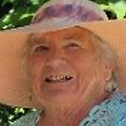
By Wendy Goddard Drawing on a lifetime as a teacher, therapist and parenting educator, Wendy explores how the insights of Alfred Adler's Individual Psychology can help parents raise resilient, confident and compassionate children. She argues that many Adlerian ideas sit comfortably alongside humanist values and offer practical guidance for family life today. Wendy is a retired English teacher and Adlerian therapist. She lives in Bournemouth on the south coast of England and i
Wendy Goddard
Jul 317 min read


Families that shape us: Jane Austen and Thomas Hardy on inheritance and identity
By John Hubbard What do Jane Austen and Thomas Hardy tell us about the influence of family? John Hubbard compares four classic novels to explore how personality, upbringing, work and social circumstances shape the people we become. While Austen emphasises inherited character and family relationships, Hardy is more interested in the transforming power of community, labour and changing social worlds. John Hubbard is a retired English teacher and a National Trust volunteer guide

John Hubbard
Jul 318 min read


Teaching children to think: how Philosophy for Children is transforming education in Nigeria
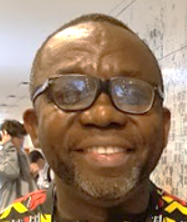
Leo Igwe at the World Humanist Congress in Copenhagen, August 2023. Photo by David Warden. By Dr Leo Igwe How can schools prepare children not just to absorb knowledge, but to question, create and innovate? Drawing on his work with schools in Nigeria, Leo Igwe argues that critical and creative thinking should be taught from an early age. He introduces the educational approach known as Philosophy for Children and explains how it is helping to equip young people with the habits
Leo Igwe
Jul 316 min read


Humanistic education in north-west India
By Dr Harmeet Kaur Can schools do more than prepare children for exams and employment? Harmeet Kaur describes an innovative fellowship programme in north-west India that seeks to nurture critical thinking, emotional maturity and humanitarian values through experiential learning. Dr Kaur is Clinical Psychologist & Fellowship Director at the International School of Humanitarian Thoughts and Practices, India. Humanism has always affirmed that every individual possesses the capac

Dr. Harmeet Kaur
Jul 315 min read


Learning how to change our minds and why it matters to humanists
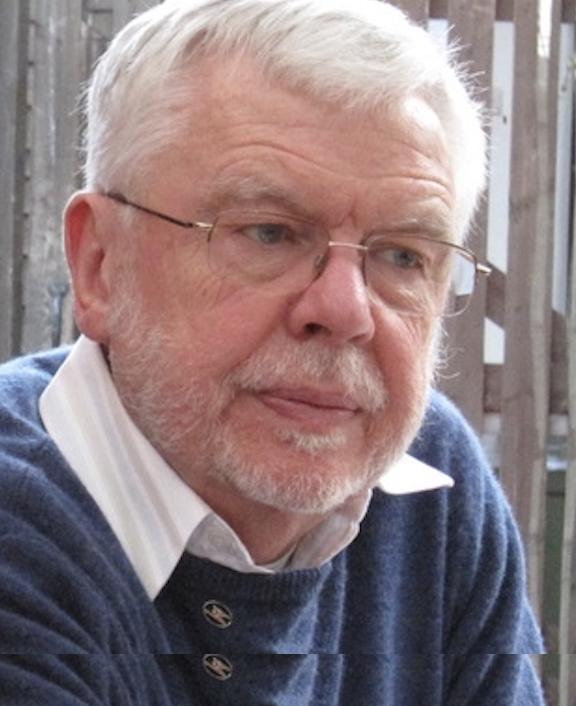
By David McKnight Humanists rightly value reason, evidence and critical thinking. But are these enough on their own? Drawing on recent neuroscience and a lifetime's experience in science education, David McKnight argues that perhaps the greatest challenge is not learning new facts but developing the capacity to rethink our assumptions. If humanism is to flourish, it must become not only a movement of reason but a movement of continual learning and adaptation. David is a retir
David McKnight
Jul 314 min read


The National Emergency Briefing on Climate and Nature: what the experts said
By Maggie Hall What do leading scientists, economists, military leaders and public health experts believe are the greatest risks facing the UK over the coming decades? Maggie reports on the National Emergency Briefing on the Climate and Nature Crisis, held at Westminster Hall, London, in November 2025, bringing together the key messages from ten expert speakers. Maggie is a former Chair of Brighton Humanists. This report summarises presentations from ten experts covering clim
Maggie Hall
Jul 3119 min read


Should humanists stop eating meat, eggs and dairy?
By Dr Mike Flood Mike is Chair of Milton Keynes Humanists and of Humanism for the Common Good. Humanism for the Common Good, an independent and collaborative project, is developing a series of Humanist Response Guides exploring the theme of “Living a Worthwhile and Fulfilling Life in Challenging Times”. This article presents a short version of one of the first guides. Mike Flood weighs the ethical, environmental and practical arguments for and against eating meat, eggs and d

Mike Flood
Jul 314 min read


Criticising religion is not racism
By David Brittain When David Brittain criticised an aspect of Islam during a family conversation, he was surprised to find himself accused of racism. In this personal reflection, the founder of Humanistically Speaking argues that a liberal society must distinguish between criticism of ideas and prejudice against people if it is to defend both freedom of expression and equal respect for all. I was enjoying an evening meal with my daughter and son-in-law the other day when I ma

David Brittain
Jul 314 min read


A journey to humanism: religious highways, interfaith streets, humanist trails
By Chris Highland How does someone move from evangelical certainty to humanist freethinking? Chris Highland retraces his remarkable spiritual journey through Christianity, Judaism and Zen Buddhism, discovering that each tradition, in its own way, helped lead him beyond faith. Chris is a teacher, writer and humanist celebrant living in the Blue Ridge Mountains of North Carolina. A Presbyterian minister; a Jewish rabbi; a Zen Buddhist priest; an Evangelical professor; a Catholi

Chris Highland
Jul 314 min read


Thinking like a humanist: a review of Perspectives for a New Enlightenment
George Hewson is the author of Perspectives for a New Enlightenment: Essays in Humanist Understanding (2026). Book review by David Warden, editor of Humanistically Speaking. George Hewson taught World Cultures at the Royal Ontario Museum in Toronto. Now retired, he continues to teach Aikido, the Japanese martial art whose philosophy emphasises redirecting aggression and resolving conflict with the minimum necessary harm. He serves on the board of the New Enlightenment Project
David Warden
Jul 317 min read


The God Effect: How Suggestion and Ritual Shape Religion and Medicine through Placebo Responses
Book review by Lloyd Hawkeye Robertson The God Effect: How Suggestion and Ritual Shape Religion and Medicine through Placebo Responses by Colin Brewer and published by Imprint Academic. Lloyd is President of The New Enlightenment Project: A Canadian Humanist Initiative. It was a pleasure to read Colin Brewer’s new book The God Effect on the invitation of his publisher Imprint Academic. Dr Brewer, who practised psychiatry for more than four decades, has a warm and personable w

Lloyd Hawkeye Robertson
Jul 314 min read
bottom of page