top of page


Man meets machine: the bromance with no pulse
By Dave Haith In this witty and thought-provoking piece, Dave Haith reflects on his surprisingly engaging exchanges with an AI chatbot – and the unsettling realisation that beneath the humour and rapport lies no genuine awareness at all. A timely reflection on illusion, authenticity, and the human tendency to project meaning onto the things that respond to us. Dave is a retired journalist and keen photographer. He lives in Bournemouth on the south coast of England. I’ve struc
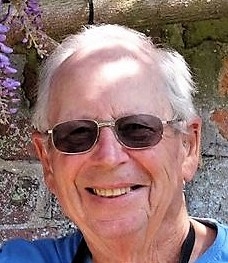
Dave Haith
Apr 303 min read


Humanist leadership in uncertain times
By Ian Brent-Smith In an age of rapid change and uncertainty, Ian Brent-Smith explores the case for humanist leadership rooted in trust, transparency, and shared responsibility. Rather than relying on rigid top-down control, he suggests that resilient organisations are those where leadership is distributed and people are trusted to think and act. Following service as an officer in the British Army, Ian ran successful engineering businesses for 40 years, providing equipment an

Ian Brent-Smith
Apr 303 min read


Can a religious believer be a philosopher?
By Dr Viliem Kurtulaj In this provocative piece, Viliem examines the uneasy relationship between religion and philosophy, arguing that a commitment to unquestioned belief sits in tension with the philosophical pursuit of truth. Viliem is an Albanian lecturer, researcher and former diplomat, whose work focuses on politics, philosophy and education. Religion and philosophy meet in metaphysics – the study of the fundamental nature of reality – but beyond this, they often pull in
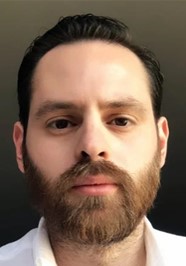
Viliem Kurtulaj
Apr 304 min read


Trump, Godwin’s Law, and the human craving for archetypal villains
By David Warden Why do we so quickly cast political figures as villains? From Godwin’s Law to the figure of Trump, this piece examines how moral heuristics, culture and media shape our reactions – and how humanism can help us think more clearly and rationally. David is Editor of Humanistically Speaking and Chair of Dorset Humanists, UK. If you spend enough time in online discussion forums, you will eventually encounter Godwin’s Law. Formulated in 1990 by the American lawyer M

David Warden
Apr 304 min read


The Return of God: Ayaan Hirsi Ali, Richard Dawkins, and the future of humanism
By Sophy Robinson Why are some of the world’s most famous critics of religion now speaking about faith, tradition and Christianity? Drawing on the voices of Ayaan Hirsi Ali, Richard Dawkins and Tom Holland, Sophy explores what this moment means for humanism — and whether a non-religious worldview can offer both truthfulness and comfort in times of crisis. Sophy is a former trustee of Humanists UK. I n recent years, several high-profile, outspoken former atheists have attracte

Sophy Robinson
Jan 318 min read


Has organised humanism had its day?
By Maggie Hall In this article, Maggie considers the future of organised humanism at the local level, questioning whether campaigning and discussion are enough – or whether humanist groups need to find new, more practical ways to serve their communities. Maggie is a retired teacher of speech and drama, a former Chair of Brighton Humanists, a member of the Humanists UK Dialogue Network, and a Humanists UK School Speaker. I have no doubt that humanism itself does have a future.

Maggie Hall
Jan 314 min read


After religion: can humanism build community?
Like most local humanist groups we have struggled to grow our humanist group. Anthony explores why the growing millions of “nones” in the UK are not joining their local humanist groups and why this might pose a threat to Enlightenment values.

Anthony Lewis
Jan 3112 min read


Humanist Café – a new way of doing humanism?
By David Warden David reports on the launch of Humanist Café in Bournemouth. Humanist Café is a deliberate attempt to move beyond traditional 50-minute lectures – which now have niche appeal – to something more engaging and communal. The response so far has been very encouraging. In her main article for this issue of Humanistically Speaking , Maggie Hall has honestly expressed a widespread concern about the future of organised humanism at the local level: ‘What I do have doub
David Warden
Jan 316 min read


Humanism in a time of crisis: responding boldly to our cultural moment
By Dr James Croft James is University Chaplain and Lead Faith Advisor at the University of Sussex, and a former Leader at the Ethical Society of St Louis in Missouri. In this article, he argues that humanism is entering a period of profound challenge, as political polarisation, rising nationalism and cultural conflict put humanist values under pressure. He calls for a more confident, activist humanism that is willing to defend dignity, pluralism and secular democracy in an un

James Croft
Jan 315 min read


What’s happened to humanism?
By Dr Mike Flood Mike has worked hard to provide a forensically-detailed survey of the health of the humanist movement in the UK and around the world. His findings serve as a sobering reality check. He concludes that humanist organisations are not currently in touch with the ‘spirit of the age’ and that our core concerns look ‘increasingly parochial’ when set against the big ethical and existential challenges of our day. Mike is Chair of Milton Keynes Humanists and Humanism f

Mike Flood
Jan 3128 min read


Choosing humanism’s battles: priorities and limits
By Jeremy Rodell What should humanist organisations campaign on – and, just as importantly, what should they not? In this wide-ranging article, Jeremy Rodell takes a close look at the realities of humanist campaigning, from assisted dying and education to climate change and culture wars. Along the way, he challenges assumptions about mission creep, public support, and the future role of organised humanism in a plural society. Jeremy is Co-Chair of South West London Humanists,

Jeremy Rodell
Jan 316 min read


Has Humanism any Future? My 2003 Conway Hall lecture
By David Warden I was invited to give a talk on this topic to South Place Ethical Society in London in 2003. The text from which I spoke is reproduced below, together with a subsequent exchange with Don Johnson of the Ethical Society of St Louis, Missouri. It ’ s good to know that, 23 years later, we ’ re still here so humanism did have a future. But to what extent do I agree with my 44-year old self? What has changed since those pre-smart phone days and what has stayed the s
David Warden
Jan 3129 min read


The future of humanism: from manifestos to meaning and moral purpose
By John Coss This is the first in a series of articles drawing on themes explored by the Greater Manchester Humanists Discussion Group. The piece reflects on different ways the ‘future of humanism’ has been imagined, from responses to global challenges such as climate change, artificial intelligence, and misinformation, to questions about meaning, belonging and moral purpose traditionally associated with religion. John is a retired actuary and former vice-chair of Stockport H

John Coss
Jan 314 min read


Humanism Ancient & Modern: can we forge a new synthesis?
By David Warden In this article, David reflects on where humanism has come from and where it might be heading next. He suggests that modern humanism, a syncretic fusion of Enlightenment rationalism and elements of social radicalism derived from Christianity, now faces an existential test: whether it can evolve from being primarily a reactive, political movement into a fuller philosophy of human flourishing, drawing on its classical resources. Modern humanism is often understo
David Warden
Jan 3114 min read


Understanding the other: resisting the tyranny of singular narratives
By Lloyd Hawkeye Robertson Lloyd traces the Enlightenment as a long, interconnected process of loosening institutional control over knowledge and individual judgement, reflecting on the challenges this legacy continues to face. He explains the purpose of the New Enlightenment Project , of which he is President, and recounts a rejected proposal to the World Humanist Congress as a missed opportunity to use Enlightenment skills to understand ‘the other’. The emergence of modern

Lloyd Hawkeye Robertson
Jan 315 min read


The future of humanism in an age of artificial intelligence
By David Falls In this article, David reflects on how artificial intelligence is reshaping reason, empathy, moral judgement and human agency, and what this means for the future of humanism. He argues that while AI transforms how knowledge is produced and decisions are made, the responsibility for meaning, values and ethical accountability remains irreducibly human. David lives in Queen Creek, Arizona, and he is the author of God’s AI Reckoning: The Final Revelation (2025) a

David Falls
Jan 3113 min read


The Demon of Doubt: how uncertainty makes us more human
By David Falls David takes Descartes’ radical doubt and shows how uncertainty can deepen, rather than diminish, our humanity. In this thoughtful piece, he explores how meaning, ethics and compassion become more authentic when they are chosen rather than guaranteed. David lives in Queen Creek, Arizona, and he is the author of God’s AI Reckoning: The Final Revelation (2025) and the forthcoming The Great Silence: What Remains After Belief. I’ve stared into mirrors long enough t
David Falls
Jan 316 min read


Lessons from Kenya: what we may have lost in modern Britain
By Mattie Robson After completing a Master ’ s degree at Manchester University and seeking professional and personal experience beyond academia, Mattie travelled to western Kenya to volunteer with a charity called the Centre for Indigenous Child Rights. The experience was profound and will stay with him forever. In this article, he reflects on everyday forms of community, belonging and cultural practice, and what their quiet presence there reveals about what we may have lost

Mattie Robson
Jan 315 min read


From ideas to action: how humanism can better share its message
By David McKnight In this article, David reflects on decades of involvement in humanist and science advocacy, exploring how humanist ideas are communicated, who gets to shape them, and how participation, clarity and cooperation might help humanism connect more effectively with the wider public. David is a retired science teacher and a Nuffield Chemist. He has a BSc Honours degree in Metallurgy and a Master’s degree in Education from Reading University. Editor’s note This arti
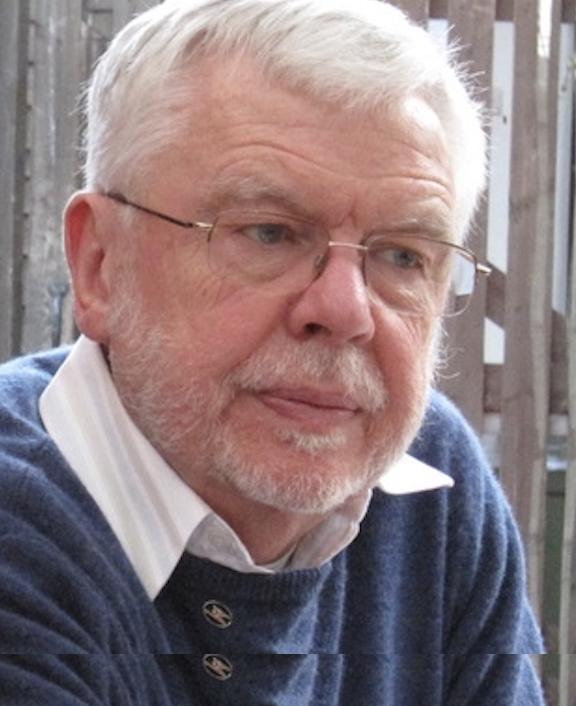
David McKnight
Jan 3110 min read


Why do humans laugh? Philosophy, ethics, and the social meaning of humour
By Barry Newman Barry is a retired intensive care consultant. He leads the school visiting team at Dorset Humanists and has spoken to thousands of students about humanism in schools across the Bournemouth area. In this edited transcript of a recent talk for Dorset Humanists, he explores one of the most familiar yet elusive features of human life. Drawing on medicine, philosophy and cultural history, he asks why we laugh, what humour does for us socially, and where its ethical

Barry Newman
Jan 317 min read
bottom of page