
After religion: can humanism build community?


By Dr Anthony Lewis
Following a global career as an exploration geoscientist, Anthony found creative fulfilment in his passion for music – but also social isolation. Through getting involved with Windsor Humanists he has been able to connect with his local community and make many new humanist friends. However, like most local humanist groups, the Windsor group has struggled to grow. In this article, Anthony explores why the growing millions of ‘nones’ in the UK are not joining their local humanist groups and why this might pose a threat to Enlightenment values.
After travelling the world for 30 years, working in the energy industry as a geoscientist exploring for oil and gas, I took early retirement to pursue my passion for creating and producing electronic music. I have found this new existence fulfilling though definitely less lucrative financially, and also, unfortunately, socially isolating. This was because I had not established many roots in my local area of Windsor, having previously been very focused on my professional career. Whole months passed after I retired when, apart from my family in Ireland, the only person I met or talked to regularly was my husband, Rick.
Neither of us had an obvious solution to my post-retirement seclusion. We even seriously considered joining a local church, simply as a way to make contact with our local community. Then we spotted that the World Humanist Congress was being held in Oxford in 2014, just a short train ride away from us in Windsor. The weekend we spent there, being ‘world humanists’ at a global congress, was a triumph that exceeded our expectations. We spent a glorious weekend in the summer sunshine among the Oxford spires, listening to the big thinkers of the global humanist movement. Richard Dawkins, Anthony Grayling, and Wole Soyinka, a writer from Nigeria, were just three of the amazing highlights. We met so many lovely, friendly people with whom we had so much in common. We realised that we both wanted to get more involved, as we had probably been humanists, with a small ‘h’, for most of our lives, after jettisoning the baggage of our Catholic upbringings.
Getting involved with our local humanist group
After the World Humanist Congress, I joined Humanists UK as a life member, but discovered to my dismay that there was no local humanist group near us. With the help of Humanists UK, and guidance from our nearest established groups, Farnham Humanists and South West London Humanists, we got together with some other local humanists to set up Windsor Humanists as a ‘Local Partner Group’, affiliated to both Humanists UK and the National Secular Society.
Being involved with Windsor Humanists has been a great success for us personally, as we have made many non-religious friends in our local area. We have also made humanist friends nationally through our involvement with Humanistically Speaking, attending several Humanists UK and National Secular Society conventions, and through regular collaborations with our nearby local group, Reading Humanists.

I now definitely feel more connected locally. I have visited more than fifty local schools to talk about humanism and my passion for science. My fossils always go down well with the pupils, especially my fulgurites. These are ‘fossilised lightning’ – melted silica structures – which I collected while working in the Sahara Desert in Algeria (see the rather surreal photo below, which I will refer to later).
In addition, we have made friends with people from many different faiths and ethnic backgrounds through our involvement with local inter-faith groups and our local Standing Advisory Councils for Religious Education (SACREs). I have also been on the local radio a few times, written the occasional ‘Thought for the Week’ column for the local papers, and even given the ‘prayers’ a couple of times at the start of Royal Borough of Windsor and Maidenhead full council meetings.
Windsor Humanists has become a visible local presence for humanism, with a recognised profile that allows us to represent the non-religious perspective. This is important, given that 36 per cent of the local population identified themselves as non-religious in the 2021 UK Census.

‘Does humanism lack an overarching concept of belonging? Do we resemble fulgurites in the Sahara Desert?’
Despite being a tremendous success for us personally, Windsor Humanists has remained a fairly small organisation, with about 100 members and up to 15 people attending our regular monthly social events. As a local humanist group, we have struggled to grow, especially since the pandemic. We have not found a way to attract the latent diaspora of the non-religious living locally, many of whom are probably humanists with a small ‘h’.
We suspect this is partly because people are simply getting on with their lives – raising families, running businesses, and establishing their careers. But a large part of the issue may also lie in an inherent feature of the humanist outlook: the belief that all of us should find our own meaning and purpose in life. Does this mean that humanism lacks an overarching sense of belonging that calls us to come together as a community?
By analogy, are humanists like the fulgurites in the Sahara Desert in the photograph above — each of us standing tall, living our lives our own way, making the most of this precious one life, but as individuals leading largely separate existences, with little to bind us together as a community? Are we condemned to the pursuit of separate, individual purposes, unable to align ourselves sufficiently to form something coherent and enduring? As the old adage goes, get twenty humanists together and you will have at least twenty different opinions about everything. As a collective of freethinkers, is forging a common purpose – and an enduring, cohesive identity – even possible?
Religions create belonging and a sense of community
Religions provide a clear, aligned sense of life purpose and strong group bonding. They do this through a shared belief in the divine and the promise of an everlasting afterlife. They also offer doctrines and rituals that create a rhythm in their adherents’ daily lives, and, in nearly all cases, require regular collective worship. This brings devotees from a wide variety of socio-economic backgrounds together, forging a recognised community and a shared, faith-based identity.
As the anthropologist Robin Dunbar argues in How Religion Evolved: And Why It Endures (2022), religions provide important social bonds that improve the chances of survival for a highly social species such as Homo sapiens. A predilection for belief appears to be an evolved feature of human beings. Over millennia, religions have refined highly effective bonding techniques that draw on this cognitive need for belief, creating a powerful sense of belonging that is starkly lacking in much of the non-religious world.
When I was working overseas, I often envied my religious colleagues, who had ‘ready-made’ faith-based communities they could join almost anywhere in the world. Those of us without a religion, by contrast, found it harder to connect with local cultures, which in many places remain strongly faith-based.
‘I do not think any of us currently involved in local humanism has yet worked out what a local humanist group is really for.’
In contrast, in the UK, most local humanist groups do not endure, but tend to come and go on a regular basis. They are often formed sporadically, when a small cadre of dedicated volunteers is willing to put the effort into running events and bringing people together. Clearly, some humanists with a small ‘h’ do want to connect with other like-minded people, but they represent only a tiny fraction of the roughly 30 million people who now identify as non-religious, or ‘nones’, in the UK.
Historically, local humanist groups often go through successive periods of enthusiasm, growth and eventual demographic decline. Meeting once a month for a speaker, debate or discussion appears to attract only a limited subsection of the non-religious. I do not think any of us currently involved in local humanism has yet worked out what a local humanist group is really for, or why so many of the ‘nones’ choose not to get involved.
Why not weekly humanist services?
Some suggest that humanism could adopt some of the more positive aspects that religions use to build a sense of community, through rituals and regular events. After all, these techniques have been honed to meet deep-seated needs in us, as evolved creatures, for a sense of belonging and a framework of belief to guide how we live our lives.
There are now trained humanist celebrants, chaplains and school speakers, so humanism has already adopted aspects of traditional religious practice. And Humanist Weddings are now legal in in Scotland and Northern Ireland but not in England or Wales. The Norwegian Humanists run Humanist Confirmation Ceremonies to mark the 'coming of age' of young humanists. There are also around 40 independent Sunday Assemblies, which aim to provide a ‘church-like’ weekly experience for the non-religious, through music, performance and readings of inspirational poetry and prose.
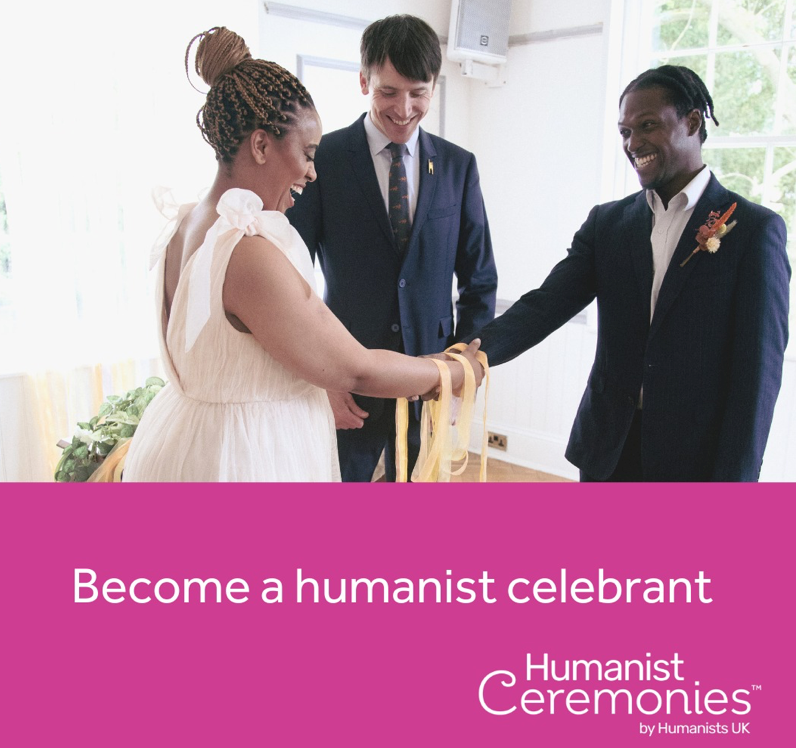
Could humanism appropriate some of the best aspects of religion to run weekly ‘humanist services’ that replace ‘collective worship’ with ‘humanist celebrations’? For example, by focusing on human progress, potential, achievements, and Enlightenment values. Could ‘prayers’ be replaced by ‘moments of reflection’, using poetry and prose? And, as Sam Harris argues, could the more divine and spiritual aspects of religion be replaced by the more modern concepts of mindfulness, and by building improved self-awareness through meditation, which has proven health and cognitive benefits?
I know that many humanists balk at this idea, especially those who were brought up in high-control religions and carry traumatic memories of being indoctrinated or forced to sit through religious services as children. Putting on such weekly gatherings would also require enormous effort and resources, probably beyond the capacity of most local humanist groups, and so, as far as I am aware, it has not yet been seriously tried.
Finding purpose through politics
Some think the answer to attracting more members is for local humanism to become more politically active. This can simply mean supporting the campaigns of Humanists UK or the National Secular Society, which is largely uncontroversial and already happens in most places. Others, however, argue that local groups should champion more partisan political causes. But how does a local group decide which stances to take, given that any particular political position is likely to put off as many people as it attracts, especially on polarising issues?
The larger local humanist groups tend to be based in more urban centres and, as a result, can afford to be more overtly political, because they can reach a critical mass of members even if some are put off by the causes they choose to champion. Given their urban location, those political priorities are usually left of centre. As a result, the overall culture of humanism in the UK, with a capital ‘H’, as represented by Humanists UK and the larger urban groups, is often perceived as being firmly rooted on the left. Its backdrop is shaped by a strong public-sector presence, a ‘not for profit’ outlook, and a focus on academic and educational endeavours.

There exists a significant ‘blind spot’ in the movement towards the worlds of business, wealth creation, and entrepreneurial activity. This I personally find difficult to understand, given that wealth creation has been a major driver of human flourishing since the Enlightenment some 300 years ago, and that many of the greatest business innovators have held broadly humanistic outlooks.
Human progress has not been driven solely by ‘progressive’ political projects and advocacy, but also by scientific, technological, economic and business innovation and endeavour. As a result, humanists like myself, who lean more towards the centre right because of a stronger emphasis on wealth creation as a critical driver of progress, can often feel that Humanism, with a capital ‘H’, is not really for them, given the underlying presumptions in favour of left-leaning politics that seem to pervade much of the movement.
In contrast, Windsor Humanists has a politically diverse membership. We have Corbynites, Green Party members, and members of Reform. This makes for lively and often interesting discussions at our events, where a wide range of opinions is respectfully expressed across the political spectrum.
Smaller local humanist groups in more suburban or rural areas, such as Windsor Humanists, cannot afford to be too politically partisan. Doing so would alienate a significant proportion of their membership, whatever stance is chosen, and would, as a result, risk the group’s ability to survive.

The nones will eventually be captured
It is clear that humanism, with both a small ‘h’ and a capital ‘H’, is not currently growing in the way one might expect, given the significant and ongoing increase in the number of ‘nones’. This may be due to a number of factors, some of which we have already explored.
For example, many of the non-religious may simply be getting on with their separate lives, free from the constraints of religious dogma. Others may be put off by the perceived, or actual, political prejudices of organised humanism. Still others may be unsure of what getting involved with humanism would add to their lives. This is perhaps not surprising, given that, as we have already noted, many humanists themselves struggle to articulate clearly what a humanist group is really for.
However, I believe that Humanism must find a way to fill the ‘belief and belonging’ space left by the decline of traditional religion, for four main reasons:
The Enlightenment has an unparalleled and proven track record that must be actively defended. Without it, much of humanity could still live under some form of theocratic tyranny. It marked a unique turning point in human history, delivering unprecedented improvements in health, prosperity, freedom and knowledge. These advances arose from rejecting religious dogma and superstition in favour of observation, evidence, reason and science. The resulting acceleration in social, technological, medical and economic progress continues today. Humanism is unusual among belief systems in being firmly rooted in Enlightenment values of reason, pluralism, and respect for diverse perspectives. These values are not abstract ideals; they are empirically validated by centuries of success. Our future survival and continued human flourishing depend on them being championed with the conviction, coherence, and emotional resonance traditionally provided by religions and belief in the divine.
The retreat of belief creates a vacuum that existing, often intolerant, theocratic religions are eager to fill. Many unreformed traditions correctly perceive Enlightenment values as an existential threat to their authority. In some parts of the world, radical forms of Islam in particular continue to dominate, where liberal democracy, free inquiry and human rights are resisted, sometimes violently and unapologetically. This threat is no longer distant. Mass migration means these ideological conflicts increasingly manifest within liberal democracies themselves. If humanism fails to offer a compelling alternative framework for meaning and belonging, that vacuum may be exploited by illiberal belief systems, with the advance of theocratic thinking to the detriment of everyone.
Traditional religions may yet adapt and reabsorb many of the ‘nones’. We should not underestimate their ability to respond to the rise of the non-religious. In the absence of a strong humanist identity, some ‘nones’ may drift back towards traditional faiths rebranded in more liberal forms, such as ‘Christian humanism’. Established religions already possess powerful institutional strengths: community, ritual, moral narrative, and identity. It is striking that some mainstream traditions are now positioning themselves as compatible with, or even as the roots of, Enlightenment values. Prominent humanist thinkers such as Ayaan Hirsi Ali and Richard Dawkins have come to identify as Christians, or as ‘cultural Christians’. If humanism remains defined largely in negative terms – as ‘not religion’ – and focused mainly on the world’s existing woes, and partisan politics, rather than offering a positive worldview and a message of hope that provides meaning and belonging for the ‘nones’, it risks losing the contest for their attention by default.
Irrational secular ideologies are emerging as quasi-religions. The decline of traditional faith has not eliminated irrational belief; it has merely displaced it. New secular movements increasingly resemble religions in form, even as they reject reason, scientific inquiry and open debate – the very foundations of the Enlightenment. The recent emergence of ‘woke’ ideologies, grounded in postmodern challenges to the idea of a material, objective reality, illustrates how easily misanthropic and dystopian belief systems can take root when meaning and belonging are unmet. Without a confident, values-based humanism, secular societies risk replacing religious superstition with untethered secular superstitions. The recent book The War on Science: Renowned Scientists and Scholars Speak Out About Current Threats to Free Speech, Open Inquiry, and the Scientific Process (2025), edited by Lawrence Krauss, argues that such trends are seriously undermining free speech, open inquiry, and the integrity of the scientific process.
‘Humanism must evolve from a largely philosophical or partisan political stance into a lived, shared worldview, championed with the seriousness and commitment once reserved for faith.’
The decline of religion does not eliminate the human need for meaning, belonging and moral orientation. If humanism does not consciously step into this space – positively, emotionally and communally – it may be filled by forces hostile to Enlightenment values. Humanism must therefore evolve from a largely philosophical or partisan political stance into a lived, shared worldview, championed with the seriousness and commitment once reserved for faith.

Final words
My journey into humanism illustrates both the promise and the fragility of organised humanism today. At its best, it can offer friendship, intellectual stimulation, and civic engagement grounded in reason, compassion, and a sense of shared humanity. My experience with Windsor Humanists shows how deeply enriching this can be. Yet it also reveals the limits of our current model: despite the rapid growth of the non-religious, humanism remains small, uneven, and poorly understood.
To attract the ‘nones’ before they drift elsewhere, Humanism must confidently articulate what it is for. It must be welcoming across political, social and cultural divides, fostering a broad sense of community without dogma. In doing so, it can defend the Enlightenment legacy and offer a shared life-affirming framework suited to an increasingly non-religious, plural world.
Humans are social creatures with an evolved need for meaning, inspiration and community. Religions have long fulfilled this role through belief, ritual, and a sense of collective purpose. As religion declines, that psychological and social space does not disappear; it becomes contested. It may be claimed by rebranded faiths, illiberal theocracies, or divisive secular ideologies hostile to Enlightenment values. If humanism does not lay claim to the ‘nones’, others will.
Useful links
War on Science Lawrence Krauss and others 2025 - book launch Free Speech Union
How Religion Evolved - Robin Dunbar 2022
How to Meditate - Sam Harris

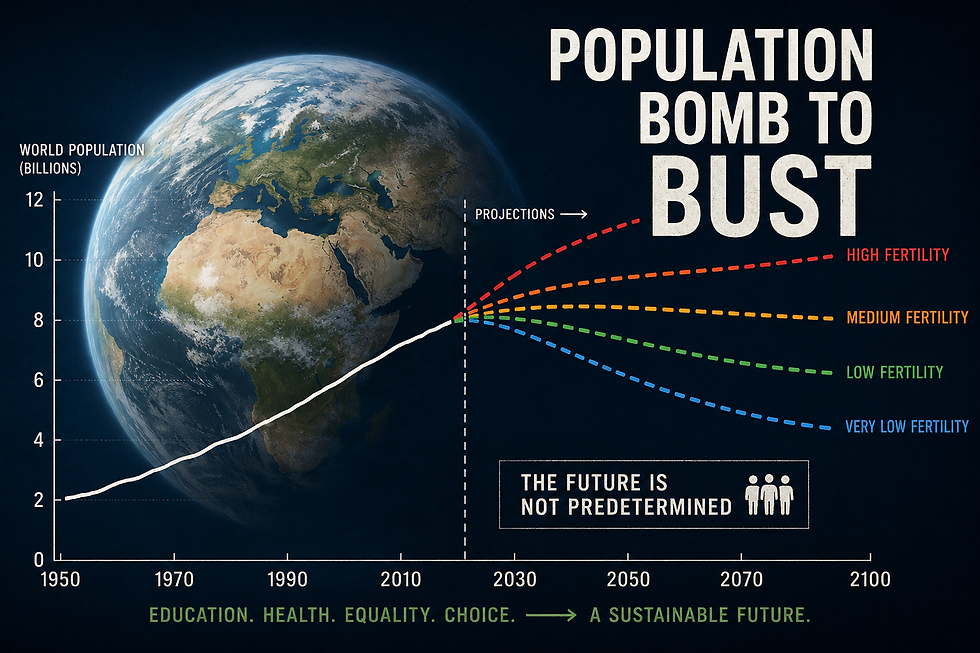

Aaron, some interesting ideas there! I especially like - 'deliberate, structured, communal reflection on everyday life' Anthony
https://chatgpt.com/s/t_697f5c8d29a08191ba884d7ed7b7d85d
Chatgpt reply, definitely has some scope.
Humanism doesn’t need an enemy (religion) to justify itself.
It needs a job.
This months/quarter topic has grabbed my attention, and after a lengthy comment on Maggies article just, I find myself with thoughts here too.
What is humanism for?
It's a fascinating question. In my reply to Maggie I centered around the sales pitch and draw of humanism, but why does it exist in a ‘mostly’ non-religious country. I say this living in non-religious towns all my life where faith domination was never a perceived problem.
In today's modern society I think we could focus on:
■ Societal improvement.
■ Thinking of solutions.
■ Coming together to realise them.
Everyone everywhere complains about ‘what's is’. Potholes, crime, government, traffic,…