
Letter to Monica: a father’s advice on her 50th birthday
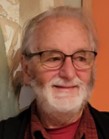

By Tod Lundy
For her 50th birthday, Tod Lundy’s daughter Monica asked that he write a letter of advice for growing old. In response, he wrote the letter reproduced below, with reflections on: A Broad View; Conduct of One’s Life; and Growing Old.
This is the fourth in a series of personal reflections from Tod, drawing from his own experience of life. He is a retired architect living in Astoria, Oregon, and is the facilitator of Humanist Discussions of Astoria which is held online every Monday.
A broad view
When starting any project one should attempt to understand where it will fit into the context of one’s reality. In doing so, look at how your life fits into the big picture. Make that the largest picture possible. For you, Monica, approaching your 50th birthday, this is a good time to make this effort if you haven’t done it already. And if you have, do it again, as things change. The broad view is a concept of your own making, so it is not for me to suggest what yours should be. However, I can share my own broad view, which has changed over the years.
We too frequently forget, as we think in terms of ourselves, that as individuals we are insignificant. We are a minuscule part of a species we call humans – a species that evolved on Earth, along with all other animals, from single-celled life forms over the past 3.7 billion years. Each of us is one of some eight billion humans currently living on this planet. Earth is linked to our star, the Sun, which is one of hundreds of billions of stars in our galaxy, the Milky Way. The observable universe contains hundreds of billions to perhaps trillions of galaxies. No one knows what lies beyond the limits of our telescopes, but it is likely to be even more vast.
The insignificance of each individual is beyond description. And yet we each exist as an individual living a unique life, in a flash of time. It is practically impossible for any one of us to have an understanding of our place in this big picture. Still, we can make a difference, a contribution to our minuscule part of it. We can conduct our lives in a way that is suitable to this understanding. To do so pays off by giving us a sense of purpose.
Conduct of one's life
How are we each to structure the course of our lives? The most important aspect is the adoption of worthy principles. Your mom and dad are initially responsible for instilling in you the fundamentals of living a worthy life. One of the most important of these, which I hope we instilled, is to be honest in all things. See situations clearly. Don’t be swayed from objective reality by others' efforts to persuade you otherwise. Another worthy principle is to be a participant in the lives of others, and to be helpful to family, friends and associates, those you care for most, but also, occasionally, to a stranger in need. Finally, it is important to care for the survival of the diverse life on this tiny planet. If your mom and I did a good job, you have developed these and other principles of your choosing to live a fulfilling life.
Within the structure of our principles, we each develop our personal goals (aspirations). Like a small boat attempting a trip around the world, we must continually reassess our situation and make adjustments to our course while holding to our intended destination, our goals. I can’t tell you what your goals should be. However, I can describe some of the beacons upon which I have relied to find my way. First, it is important to recognise that your goals will most likely change over time and that you probably will not accomplish all of them. So keep a reserve of resources, financial and emotional, in case of falling short. While adjustments may be necessary, never abandon your principles. Always hold out some goals as a guiding star despite feeling, at times, that they will be impossible to achieve. Above all: never give up on yourself.
The most I can remember about my goals as a teenager is that they included the desire to be liked, to have close friends, and to have a mutually loving relationship with my first girlfriend. By the time I was in college, I knew that I wanted to be able to contribute to the well-being of other people. I sought a wide range of experiences to enrich my understanding of life. My early majors were medicine, and then psychology. I wanted to be involved in education by being a high school counsellor.
That was before discovering a love of architecture. Even there, in learning about buildings, my focus was on people who live, work and play in the built environment. After enrolling in the architectural program at the University of Oregon , that goal became clear. I wanted to design buildings and to teach architecture.
Eventually, I felt the need to find a woman with whom to have a family. This happened while I was teaching architecture at the University of Kansas. About then I also became aware of the need to maintain a healthy body as well as an active mind.
My career as an architect and teacher provided ample intellectual challenges. As such I had to rely on imagination, computation, and communication skills. As for the physically healthy body, an exercise regimen never appealed to me. I wanted my efforts to accomplish something tangible. So, after returning to Portland, Oregon, I satisfied that need by undertaking construction projects. Over my lifetime, I have rebuilt four derelict houses and a delicatessen. I have also designed and built two new houses. These seemingly divergent kinds of work, that of an architect and that of a carpenter/ contractor, provided a lifetime balance of intellectual and physical activities. Another part of maintaining mental balance is having an active social life. This is not the cocktail party type of social life, but rather it is sharing important experiences with small groups of close friends and family.
Growing old
Here’s the fun part. My dad, your grandfather, Monica, died before he was 60. I thought that I would have a short life also. I made it my objective to live long enough to see the end of the millennium. Now here I am, a quarter of the way through the next century and still getting up every morning.
I find getting old to be a blessing. That is not to say that experiencing an ageing body and mind is something to rave about, but it is a part of life that most of humanity has not had the opportunity to experience. Consequently, I feel joy at being here – slower in movement, physically weaker, and with a poorer memory, but still here. I welcome every day, every task. Every experience, good or bad, is cherished, because it is part of life. I am especially fortunate to have Carole to share this final stage of life with me. I am also fortunate that I have my three kids, who have survived in good health.
Conclusion
We were born. We were infants, then children. We were educated and became adults. We had families and jobs or we did not. We worked. We wandered. We dreamed. If we were fortunate, we reached that age and stage of life where we could retire from our paying job, and have time to look back with satisfaction and regrets. We also can look ahead to tasks still to be accomplished or abandoned, and eventually to illness and death.
Death is the end of our direct participation in life, it is not the end of our existence. Our bodies will be buried or burned, and our possessions will be dispersed or discarded. And yet we will still exist in the minds of those who knew us. We continue to exist there in much the same way as we did while we were alive. After all, to a large extent, our existence, whether alive or after death, resides in that which others think of us. As time passes, those who knew us will think of us less often. Memory of us will fade. If our name is mentioned, even those who knew us may have to think back. Then, after a thoughtful pause, they may say “Oh yes. I remember him.” Each time one of those who did remember us dies, an aspect of us also dies. Eventually, all memories of us, held by friends, family and acquaintances, will be gone. By then, the only trace of our having existed will be through our descendants, if any, and, possibly through artifacts we had created, writings, art, buildings, or other physical things. Though they may still exist, it is not likely that such things will be associated with us. Even more nebulous are the effects, good or bad, of our actions, a few of which may outlast memories. Eventually, all of these will disappear.
We were alive and then we weren’t. We were known, and then we were not.
What was the point of it all? One important lesson is the realisation that this brief existence is best served by experiencing it to the fullest, making the best of every day, achieving joy through worthy actions and striving to positively influence the lived experience of all beings, including other human beings.


Comments