
Understanding turbulence and instability: a systems perspective


By Dr David Mayston
Why do periods of instability seem to spread and intensify across societies? Drawing on a systems perspective, David Mayston explores how interconnected pressures — from climate change and economic shocks to conflict and public services — can combine to create turbulence. He argues that humanism, with its respect for evidence, long-term thinking and shared human welfare, offers important tools for understanding and responding to these challenges.
David has a PhD in Economics from the University of Cambridge and is a member of the independent York Humanists.
Turbulence and instability, and their negative impacts on human wellbeing, can arise in numerous ways, including:
a. wars and conflict between countries
b. conflicts within individual countries
c. economic recession
d. financial crises
e. cost of living and workload pressures
f. environmental decline, climate change and the disruption of weather patterns
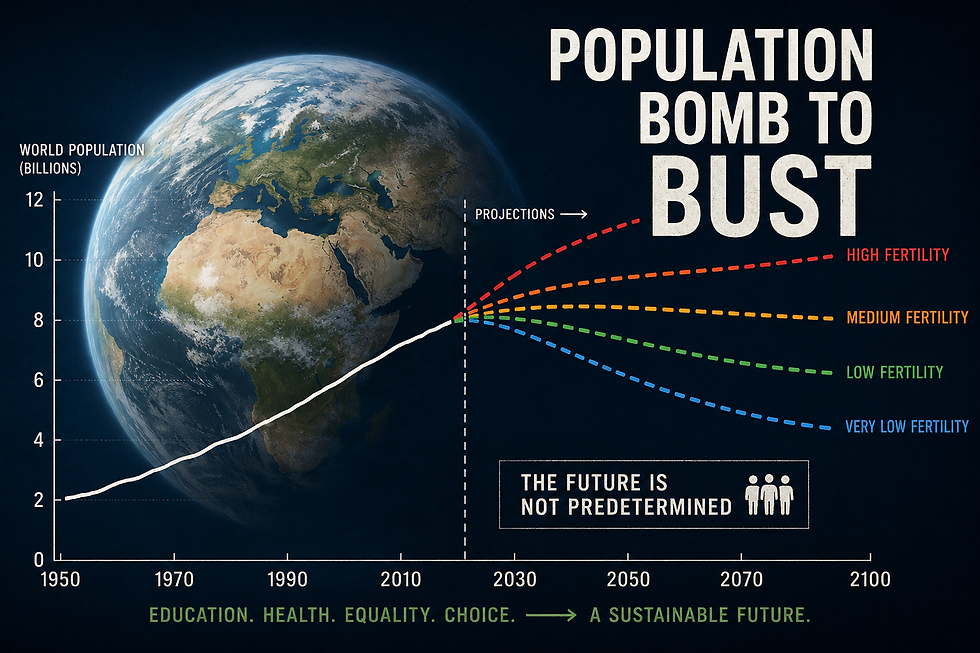
g. population and immigration pressures
h. pressure on public services, including healthcare; and
i. personal and social relationship breakups
Do these ways have anything in common and what are the underlying causes of such turbulence and instability? And what contributions can humanism make?
One seeming cause of turbulence and instability is an initial impact, which could be as small as a butterfly’s wing setting off a tornado, or as large as the 10 kilometre asteroid initiating the extinction of non-avian dinosaurs 66 million years ago or the shooting of Archduke Ferdinand before the horrors of WWI. However, the consequences of such initial impacts take place in the context of interrelationships which are potentially unstable. There may indeed be some values of the underlying variables which are stabilising, but others which are destabilising. Thus whether vegetation catches fire depends on the prevailing temperature and its dryness. There may at the same time be present non-linearites, such that the vegetation will not catch fire over a large range of these variables, but once it does it is difficult to extinguish. This also leads to the possibility of tipping points, such that the system changes its behaviour in substantial qualitative ways once key values, here for temperature and dryness, are surpassed.

Such tipping points may well also imply that even moderate increases in the average value of a variable, such as temperature, can substantially increase the risk of extreme events, such as forest fires. If there is a temperature probability distribution, such as a bell-shaped normal distribution, increasing the mean of the distribution will shift the distribution to the right, causing the probability of extreme events, given by the area under the tail of the distribution in excess of the tipping point value, to increase in a non-linear way. Such fires also illustrate in a dramatic way the scope for destabilising feedback effects. Without sufficiently large fire breaks. raging fires in one part of the forest can readily spread to other parts once they are interconnected. Emergency services then soon become overwhelmed, adding to their impact.
Cumulative longer-term feedback effects may also prevail, with large quantities of CO2 from the burning vegetation, and the darkened soil reflecting less sunlight back into space, increasing the risks of globally rising temperatures. A humanist respect for scientific evidence and analysis is more likely to recognise the importance of these quantitative magnitudes, and avoid destabilising tipping points, than a dismissal of climate change as a hoax and an undermining of the work of environmental protection agencies. The long-term consequences of global warming could indeed be dire. Steadily melting glaciers not only mean even less of the sun’s warmth reflected back into space, but also steadily rising world sea levels that will adversely impact the many coastal cities of the world with large populations. The reduced weight of glaciers on the mountains underneath additionally means that there is less pressure to contain any volcanoes below, with their warming impact on ice sheets in the Antarctic, Iceland and elsewhere further accelerating the melting process.
Interconnections
Important also are the many interconnections between the areas a - i above, that may cause instability in one direction to add in a cumulative way to instability in other directions. Thus wars, both international and civil, may result in infrastructure damage, oil price hikes, increases in public and private borrowing costs. and greater population movements, in turn putting pressure on public services, government financial solvency and tax rates, as may increased military and defence expenditure within limited government budgets. This will be particularly so if wars are started without an adequate appreciation of their likely duration, long-term physical and human costs, and damage to the prospects for lasting peace. Economic recession and military defeat for one country, such as Germany following WWI, may provide the conditions for the rise of nationalistic leaders, initiating future wars, or of terrorist groups and civil wars in other contexts, such as the Middle East, that fuel wider unstable escalating conflicts.
Climate change may add to increased population movements, weather disturbance, crop failure and rising living costs. Higher food prices may lead to increased poverty and ill-health, adding to the pressures and workload on public services and their labour force. Greater labour retention and recruitment difficulties may then feedback to the quality of the public service in a cumulative and unstable way. The result may be increased inequality between an overburdened health service that is free at the point of delivery and improved access for those able to pay rising fees for more expensive private healthcare [1]. Such workload, healthcare and cost of living pressures may in turn place greater pressures on individual families, their personal relationships, and their mental and physical health. So too will periods of armed conflict, with resultant adverse impacts on particular population groups that they will remember for many decades.
The significance of land
A key underlying variable which may cut across many of the directions a – i is that of entitlement to land. Armed conflicts have frequently been fought over rights to land, with long-term impacts on indigenous health [2] and on the stability of key regions. Population pressures and increased economic inequality in the face of the limited availability of land and housing may lead to steadily increasing house prices. Housing then becomes a positional good, with the ability to compete in the housing market dependent upon your income relative to others, adding to an economic rat race in which in order to stay in the race, and pay the large mortgage, both partners must get paid work, with grandparents tasked to look after any children. Negative consequences can then again follow for the wellbeing of individual families, and their stability in the face of potential shocks, such as illness.
High indebtedness can pose significant stability problems also for governments and financial institutions if their financial reserves are not adequate to overcome the many economic shocks which may arise. Some of these shocks may arise from unexpected events, but others from new innovations which have been known for many months. The connectedness of financial institutions is illustrated by the phenomenon of a bank run, in which depositors in one bank withdraw their funds when they hear of the collapse of another bank, adding to the financial crisis. While this traditionally depended on depositors forming a physical queue for their money, the innovation of internet banking means that they can withdraw their money instantaneously if they rapidly receive an alarming internet rumour.
The connectedness of the economy, in which jobs generate income for workers who then spend money to consume the output of producers, pay taxes to finance public services, and save money to fund investments, also suggests multiple wellbeing and stability problems if the innovation of AI leads to many more job losses than it creates. The earlier rise of the internet has led to declining city centre outlets paying higher taxes than the internet and arguably excessive screen time for children and others. These are just a few of the public policy issues that merit closer humanist attention to combat the adverse wellbeing impacts of continuing turbulence and instability.
Addressing the issues
The willingness of governments and politicians to address such issues, however, can itself be subject to instability. In the case of a simple left-right axis of policy choices, democracy in the form of majority voting and two-party competition may lead to pressure on both parties to move towards the ‘moderate’ centre ground to win elections. However, if there are cross-cutting complicating issues, such as immigration or support for the EU, and more than two parties, there may exist no stable majority winner. Thus in the basic ‘paradox of voting’ case known to Charles Dodgson (alias Lewis Carroll) Group i. may prefer alternatives A to B to C, whereas Group ii, may prefer B to C to A, and Group iii. may prefer C to A to B. If they are of equal size, for pairwise choices under majority rule, we now have socially A preferred to B preferred to C preferred to A, so that any initial coalition choice is unstable and can be defeated by some other potential coalition. Maintaining an initial coalition may then lead to excessive power for its more extreme members, whether religious or otherwise.
Government instability can also lead to a reaction, with a dictator stepping in to restore a form of stability. Dictators and dominant leaders, like Hitler, Stalin or Putin, may nevertheless launch their own forms of turbulence. However, subsequently removing a dictator, whether in the former Yugoslavia, Libya, Iraq, or elsewhere, by death or violent regime change will not necessarily lead to stability, but instead to further turbulence from economic and social disruption, and shifting coalitions and balance of power between the underlying conflicting groups.
A large part of the problem is therefore that there are conflicting groups who do not have a strong sense of empathy with each other. Hate can then generate destabilising further hate from reciprocating violence and suppression that can echo across generations. The strongest form of security may be not generating permanent enemies by repeated waves of violent oppression. Whether religion or ideologies reduce or amplify enmity is then an empirical question. However, ideally humanism can promote a belief that human beings have much in common and that a caring society can be based upon wider measures of human welfare that include the welfare of all participants, to guide policy responses that acknowledge the risks of unstable outcomes.
Learning from past instabilities, such as armed conflict, financial crises, genocide, and environmental degradation, is also likely to involve respecting the improvements that were previously introduced to reduce their future likelihood. This includes improved environmental standards and the improved regulation of the financial sector, the establishment of more effective global institutions, such as the United Nations and the World Health Organisation, and the development of international law, such as on starting and conducting a war, to avoid war crimes and unnecessary deaths and humanitarian crises. Many of these previous innovations can unfortunately now be too readily ignored by those with narrow views of human welfare but with excessive power.
References
[1] David Mayston, “Healthcare, instability risk and cost increases”, Discussion Papers in Economics No. 25/01, University of York, 2025.
[2] David Mayston, “Disadvantaged populations, equity, and the determinants of health: lessons from down under”, in Health, Health Care and Health Economics, eds Barer, M., Getzen, T., and Stoddart, G. John Wiley, 1998.


Comments