
Thinking like a humanist: a review of Perspectives for a New Enlightenment


George Hewson is the author of Perspectives for a New Enlightenment: Essays in Humanist Understanding (2026). Book review by David Warden, editor of Humanistically Speaking.
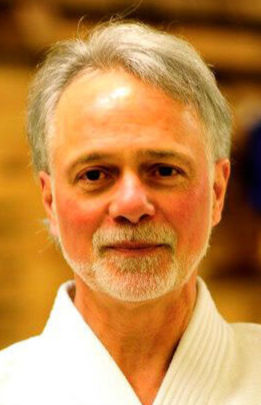
George Hewson taught World Cultures at the Royal Ontario Museum in Toronto. Now retired, he continues to teach Aikido, the Japanese martial art whose philosophy emphasises redirecting aggression and resolving conflict with the minimum necessary harm. He serves on the board of the New Enlightenment Project, an independent Canadian humanist organisation.
Introduction
Humanists often find themselves drawn into contemporary political debates. But should humanism simply align itself with progressive politics? Or should it remain an independent way of thinking, guided by evidence, reason and open inquiry, even when this leads to uncomfortable conclusions? George Hewson's Perspectives for a New Enlightenment is an ambitious attempt to answer that question.
Organised into thematic sections, the book explores humanism through a remarkably wide range of disciplines and contemporary issues. Hewson examines the relationship between humanism and subjects including art, democracy, economics, the Enlightenment, history, literature, philosophy, psychology, religion and science, while also addressing more contentious topics such as Indigenous peoples in Canada, Islamophobia, sexuality and gender, and what he terms "Woke Identitarianism". Throughout, the essays seek to place humanism in dialogue with both its intellectual heritage and the social and political challenges of the twenty-first century.
The essays began life as discussion papers for the New Enlightenment Project, an independent Canadian humanist organisation established to promote reason, free inquiry and civilised debate from an Enlightenment perspective. They were written both to articulate the group's thinking and to stimulate further discussion. Hewson's aim is not simply to present conclusions but to equip readers to think humanistically about a wide range of issues, while directing them to further reading, including authors with whom he disagrees.
Humanism and Art
Hewson begins with the relationship between humanism and art, making the important point that rationalism and emotional depth are not opposites. Rejecting the stereotype of the cold, analytical humanist, he argues that humanism celebrates compassion, joy and creativity as well as reason. Art matters because it enlarges human experience, stimulates curiosity, and deepens our understanding of ourselves and the societies that produced it. Particularly interesting is his insistence that humanists should look beyond beauty or technical skill to ask wider questions about the economic, political and cultural context in which works of art were created, such as Picasso’s powerful Guernica, which depicts the suffering and destruction inflicted on civilians during the bombing of the Basque town of Guernica in the Spanish Civil War. Rather than providing definitive answers, Hewson invites readers into an ongoing conversation about aesthetics, encouraging the curiosity and open-minded discussion that are themselves central humanist virtues. As throughout the book, the chapter concludes with an annotated bibliography. Particularly appealing are Simon Schama’s Power of Art, which explores how great works of art can challenge and transform our understanding of reality, and Tzvetan Todorov’s The Limits of Art, a thought-provoking exploration of the relationship between art, ethics and society.
Humanism and Democracy
Hewson's discussion of democracy is really a defence of liberal democracy and the freedoms on which it depends. He traces the gradual historical development of democratic government before arguing that its defining features are not simply elections but freedom of expression, minority rights, the rule of law, and constitutional limits on power. Particularly striking is his emphasis on free speech as the foundation of democratic society, while recognising that freedoms carry responsibilities and may be limited where they cause demonstrable harm. Hewson concludes that humanists, with their commitment to evidence, reasoned debate and active citizenship, have a special responsibility to defend democratic institutions and the liberties on which they depend.
Hewson provides a carefully chosen bibliography for readers wishing to explore this subject further. Particularly interesting are Bernard Crick’s Democracy: A Very Short Introduction, which argues that democracy must itself be constrained by the rule of law and human rights, and Richard Haass’s The Bill of Obligations, which complements the familiar language of rights by emphasising the responsibilities of citizenship. Hewson also directs readers to the Copenhagen Declaration on Democracy, adopted by Humanists International in 2023, linking his discussion to contemporary humanist thinking about democracy and freedom.
Humanism and Economics
Hewson does not attempt to develop a distinctive “humanist economics”. Instead, he argues that humanists should acquire a sound grasp of basic economic concepts before engaging in public debate. He introduces ideas such as scarcity, opportunity cost, GDP, inflation and unemployment before reminding readers that economic decisions are also ethical decisions, affecting human wellbeing as well as financial prosperity. Particularly valuable is his repeated emphasis on opportunity cost – the insight that every public policy involves trade-offs – and his suggestion that measures such as the Human Development Index provide a more human-centred picture of progress than economic growth alone. Readers looking for a novel economic philosophy will not find one here, but they will find a clear case for combining economic literacy with ethical reflection.
Particularly useful book recommendations include Robert Heilbroner’s The Worldly Philosophers as an introduction to the history of economic thought and Mark Carney’s Value(s), whose vision of “stakeholder capitalism” seeks to combine the dynamism of markets with ethical responsibility. Hewson also deserves credit for introducing readers to economists from across the political spectrum, from Hayek and Sowell to Galbraith and Samuelson, encouraging them to engage with competing ideas rather than a single orthodoxy.
The foregoing sections provide a flavour of Hewson’s approach. His chapters on topics of perennial interest to humanists are not intended to provide definitive answers but to stimulate informed thought and discussion – exactly the purpose for which these essays were originally written for the New Enlightenment Project. They would serve equally well as discussion starters for many other humanist groups around the world. Space does not permit a review of every chapter but Hewson also explores topics including the Enlightenment, history, literature, philosophy, psychology, religion and science, all of which would repay careful reading. Instead, I turn to some of the chapters in which he applies humanist thinking to some of today’s most challenging and contested public issues – Indigenous peoples, “wokism” and gender.
First Peoples in Canada
Hewson's chapter on Canada's First Peoples marks a shift from exposition to controversy. After providing a concise historical overview of Indigenous societies and their complex relationship with European settlement, he turns to one of Canada's most sensitive contemporary issues – the legacy of the residential schools. For more than a century, many Indigenous children were educated in government-funded, church-run boarding schools that sought to assimilate them into mainstream Canadian society, often separating them from their families and culture. The 2015 Truth and Reconciliation Commission concluded that this amounted to “cultural genocide”, a judgement that has profoundly shaped public debate in Canada.
Hewson does not deny the suffering inflicted by the schools. Rather, he argues that humanists should be prepared to examine even widely accepted narratives with the same commitment to evidence, logical analysis and open discussion that they apply elsewhere. He is particularly concerned that questioning the methodology or conclusions of official inquiries – or proposals to criminalise denial of aspects of the residential school story – could undermine the principles of free inquiry that humanists seek to defend. Whether readers agree with all of his conclusions or not, Hewson raises important questions about the relationship between compassion, historical justice and freedom of expression. It's one of the book's most thought-provoking chapters.
Secularism and Islamophobia
Hewson's discussion of secularism is a useful summary of familiar humanist principles, and he recommends Andrew Copson's Secularism: A Very Short Introduction for readers wishing to explore the subject further. More distinctive is his treatment of Islamophobia. Hewson suggests that criticism of Islam is often inhibited by concern that it will be interpreted as hostility towards Muslims rather than as criticism of religious ideas. This, I think, is an important insight. Islam is often associated with minority ethnic communities, so criticism of the religion can easily be heard as criticism of a vulnerable group rather than of its beliefs. Added to this are concerns about the violent reactions that have sometimes followed perceived blasphemy or apostasy. Hewson argues that, despite these realities, humanists should continue to distinguish clearly between respect for people and criticism of ideas. Once that distinction is lost, he suggests, some subjects become unnecessarily difficult to discuss rationally. This also helps illuminate a point made elsewhere in this issue by David Brittain, who argues that criticism of ideas must never be confused with prejudice against the people who hold them. Hewson's annotated bibliography is particularly valuable, bringing together influential voices such as Sam Harris, Irshad Manji and Ayaan Hirsi Ali, all of whom have argued, from different perspectives, that Islam should be open to the same evidence-based criticism as every other religion.
Gender and Wokism
Hewson's chapters on sexuality, gender and what he terms “Woke Identitarianism” continue the book's recurring defence of scientific evidence and free inquiry. His discussion of sex and gender begins from the biological distinction between male and female while insisting that every individual deserves dignity, compassion and freedom from discrimination. From this starting point he explores difficult policy questions surrounding medical treatment for children, women's sport, single-sex spaces and education, arguing that these issues should be approached through evidence and careful reasoning rather than ideological certainty.
He then broadens the discussion to a critique of contemporary identity politics, particularly approaches that interpret society primarily through relationships between oppressors and the oppressed and that elevate lived experience above empirical evidence. The argument over the term “woke” itself now feels rather dated, but the underlying questions remain highly relevant. How should humanists respond to political movements that seek greater social justice while also promoting contested theories of identity, power and knowledge? Hewson's answer is that humanism should neither retreat into culture-war rhetoric nor simply absorb the assumptions of contemporary progressive politics. Instead, it should remain anchored in reason, scientific inquiry and the freedom to question prevailing orthodoxies wherever they arise. His extensive bibliography is a valuable guide for readers wishing to explore these debates further. In particular, the inclusion of Musa Al-Gharbi's We Have Never Been Woke provides a thoughtful and nuanced contribution that moves beyond the polarisation of much of the earlier literature.
Conclusion
Perspectives for a New Enlightenment is not a manifesto demanding agreement but an invitation to think. Readers may disagree with some of George Hewson's conclusions, but that is to be welcomed. Hewson has not written a book that tells humanists what to believe. He has written one that asks what should distinguish humanism from both conservative and progressive ideologies. His answer is that humanism should remain an independent tradition of evidence, reason, open dialogue and intellectual humility. Whether discussing art, economics, Indigenous reconciliation, religion, gender or identity politics, he consistently reminds us that humanism is not a political tribe but a way of thinking. In an age of increasing ideological certainty, that is a refreshing contribution and one that deserves a wide readership.
Links
The book is also available on Amazon
This book review was developed with editorial assistance from ChatGPT.


An interesting perspective. I think im on board here.