
Teaching children to think: how Philosophy for Children is transforming education in Nigeria
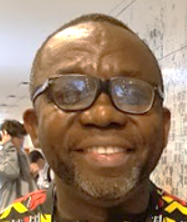

By Dr Leo Igwe
How can schools prepare children not just to absorb knowledge, but to question, create and innovate? Drawing on his work with schools in Nigeria, Leo Igwe argues that critical and creative thinking should be taught from an early age. He introduces the educational approach known as Philosophy for Children and explains how it is helping to equip young people with the habits of mind they need to thrive in the twenty-first century.
Leo is Director of the Critical Thinking Social Empowerment Foundation in Nigeria, which promotes critical and creative thinking in schools. He is also a Board member of Humanists International.
During my doctoral studies at the University of Bayreuth in Germany, I came to an unsettling realisation about my education in Nigeria, and perhaps about education across much of Africa. Again and again, professors and supervisors urged students to be more creative – in interpreting data, developing arguments and presenting ideas. Yet I found myself asking a simple question: what exactly does it mean to think creatively? Nobody had ever taught us.
Like many African students, I had spent years in an education system that expected originality at university and innovation in professional life, but had never intentionally cultivated either. We were expected to become job creators rather than job seekers, to solve problems and think independently, yet the skills needed to do these things were largely absent from our schooling.
By the time many students recognise this gap, it is almost too late. They are under pressure to complete their studies, find employment and begin adult life. Few have the time or opportunity to return to the foundations of their education and ask why these essential habits of mind were never developed.
As a result, creativity often emerges by accident rather than by design. Some students become innovative through personality, experience or sheer determination, but not because schools have systematically taught them how to think creatively. As Sir Ken Robinson famously argued in his TED Talk, many schools actually discourage creativity rather than nurturing it. This situation needs to change.
If Africa is to flourish in the twenty-first century, it will need citizens who can question assumptions, generate new ideas and imagine better solutions to old problems. That process must begin in primary and secondary schools.

Beyond memorisation
Across much of Africa, education continues to place enormous emphasis on memorisation and the reproduction of information. Success is often measured by how accurately students can repeat what teachers or textbooks have already said. This approach undoubtedly develops valuable knowledge and discipline, but it leaves little room for curiosity, experimentation or invention. Students become skilled at finding the correct answer rather than asking better questions or imagining alternative possibilities.
Creativity should not be regarded as a gift possessed only by artists or musicians. In many Nigerian primary schools, pupils study Cultural and Creative Arts, learning drawing, painting, singing, acting and other artistic skills. These are valuable activities, but creativity itself extends far beyond the arts.
Scientists, engineers, doctors, entrepreneurs and teachers all depend on creative thinking. Innovation is relevant in every discipline and every profession. Yet pupils are rarely taught how creative thinking actually works or how it can be developed deliberately. Instead of treating creativity as something mysterious or innate, schools should teach it explicitly, just as they teach literacy, numeracy or verbal reasoning.
Can creativity be taught?
I believe it can. The first step is to make creative thinking something that can be practised, discussed and assessed. Rather than assuming creativity will simply appear, schools should provide structured opportunities for pupils to generate ideas, challenge assumptions and imagine alternatives.
To describe this process, I've coined the term diverstorm. Combining the ideas of divergent thinking and brainstorming, it encourages children to think beyond what is already known or accepted, moving beyond familiar patterns to imagine new possibilities.
Creative thinking is always relational. New ideas grow out of existing ideas. Innovation involves asking not only What is? but also What else could be? Diverstorm teaches children to think in terms of alternatives. Every object, every system and every solution can be improved. Every product has limitations. Every text contains gaps. Every problem can be approached from another angle.
Instead of accepting the world as fixed, pupils learn to ask how it might be different. In this way, diverstorm encourages curiosity, exploration and intellectual adventure. It helps children understand that nothing is ever completely finished or beyond improvement. New possibilities always exist for those prepared to look for them.

A different model of education
This represents a significant shift in educational philosophy. Traditional schooling often rewards the faithful reproduction of information. Diverstorm, by contrast, values the production of new possibilities. It encourages students not simply to remember ideas but to reshape them, extend them, and apply them in original ways.
Such an approach also changes the role of the teacher. Instead of being merely a transmitter of knowledge, the teacher becomes a guide who helps pupils explore questions, test ideas and discover new ways of understanding.
Fortunately, there is already an international educational movement that provides a strong framework for this kind of learning: Philosophy for Children (P4C). Developed by the American philosopher Matthew Lipman in the 1970s, Philosophy for Children seeks to cultivate four interconnected habits of mind: critical, creative, caring and collaborative thinking. Today it is taught in many countries across Europe, North America, Asia and Australia.
In Nigeria, this approach also fits remarkably well with the aspirations of the National Policy on Education, which calls for schools to develop scientific, reflective and critical thinking. The challenge is not a lack of vision but the absence of practical methods and classroom resources that bring these aspirations to life.
Philosophy in the classroom
Through the Critical Thinking Social Empowerment Foundation, we've been working to introduce Philosophy for Children into schools in Nigeria. Our aim is to make philosophical inquiry practical, engaging and accessible, especially for children who speak English as a second language.
To achieve this, we've developed teaching materials, books and classroom resources that help teachers introduce reasoning skills in ways that children can readily understand and enjoy.
Two concepts lie at the heart of this approach: questionstorm and diverstorm.
Questionstorm
Questionstorm develops critical thinking by making questions – not answers – the starting point of learning. In many classrooms, teachers ask questions and pupils are expected to supply the correct answers. Philosophy for Children reverses this process. Children themselves learn to generate questions. Instead of simply accepting information, they are encouraged to interrogate claims, identify assumptions and explore alternative viewpoints.
Questionstorm teaches pupils that asking a thoughtful question can be just as important as giving a correct answer. It nurtures curiosity, careful reasoning, and intellectual confidence. Teachers become facilitators rather than lecturers, guiding discussion instead of simply transmitting knowledge. The classroom becomes a community of inquiry where learning is collaborative rather than passive.
Diverstorm
If Questionstorm develops critical thinking, Diverstorm develops creative thinking. Children are naturally imaginative, yet many school systems gradually train them to imitate rather than invent. Pupils learn that success means reproducing what teachers have already said instead of exploring new possibilities. Diverstorm encourages a different habit of mind.
Students are invited to think beyond the obvious. They imagine alternative solutions, redesign familiar objects, rethink accepted ideas and explore possibilities that others may never have considered. They learn that every invention can be improved, every process refined and every problem approached from a fresh perspective.
In practical classroom activities, pupils might be asked to rethink an everyday object by changing its size, shape, colour or purpose, or to imagine new uses for familiar materials. Such exercises demonstrate that creativity is not a mysterious gift possessed by a fortunate few, but a skill that grows through regular practice.
Together, Questionstorm and Diverstorm help children become active thinkers rather than passive recipients of information.

Changing the culture of learning
Our goal is not simply to introduce another school subject. We want to help create a different educational culture. Rather than measuring intelligence solely by the ability to memorise information, schools should also value the ability to ask insightful questions, generate original ideas, and collaborate with others in solving problems. This approach prepares children not only for examinations but for life.
Modern societies need citizens who can adapt to change, evaluate evidence, solve unfamiliar problems, and work creatively with others. These are capacities that can – and should – be developed from the earliest years of schooling.
To support this work, the Critical Thinking Social Empowerment Foundation organises workshops and training programmes for teachers, parents and other educators across Nigeria. These programmes help participants understand the principles of Philosophy for Children and learn practical ways of applying them in classrooms. Training has already taken place in states including Benue, Cross River, Ebonyi, Ekiti, Imo, Katsina, Lagos, Ogun and Oyo, with further workshops planned.
Looking ahead
The National Policy on Education in Nigeria already recognises the importance of developing reflective, scientific and critical thinking. The challenge now is to turn those aspirations into everyday classroom practice. If African education is to prepare young people for the future, schools must do more than transmit existing knowledge. They must also cultivate the habits of questioning, creativity, collaboration and thoughtful inquiry that enable societies to solve new problems and seize new opportunities. Teaching children what to think is no longer enough. We must also teach them how to think.


Comments