
Radical optimism: acting without guarantees


By Dr George Locke
What does it mean to be optimistic in an uncertain world? Drawing on thinkers from Boethius to Rosling, Camus and Frankl, this article explores ‘radical optimism’ – a way of acting responsibly and constructively without relying on reassurance or certainty.
George is a member of our editorial team and she volunteers with Faith to Faithless, a Humanists UK programme supporting those leaving high-control religions. She facilitates peer support groups, contributes to research and gives talks across the UK on apostasy, early Christianity, gender and sexuality.
Boethius lived 1500 years ago. Born in Rome to a wealthy patrician family, he was fluent in Greek, and his translations of Plato and Aristotle were important throughout the Middle Ages. He became Theodoric’s Magister Officiorum in 522 – the head of the government and palace affairs. Within a year he was accused of treason and imprisoned, losing his reputation and his status and wealth. Waiting for death, he wrote one of the most influential philosophical works of the medieval world.

In The Consolation of Philosophy, Boethius composes a dialogue between himself and Lady Philosophy about his situation. She appears to him while imprisoned, but not to comfort him. She argues that his suffering is not created by his loss of status and wealth, or being confined to a cell awaiting death. Rather, it is the result of erroneous beliefs. He had thought that his previous good fortune offered stability, but fortune, by its nature, is unstable and transitory. It is a wheel, always turning. Lady Philosophy describes the Wheel of Fortune with those at the top destined to fall, and while those at the bottom may rise, no position is secure. To rely on it is to misunderstand it, and what appears as loss is, in part, the removal of that illusion.

True good, she insists, cannot be taken away. It must be internal, grounded in reason, virtue, and alignment with the good. External goods are not evil in themselves, but they are contingent; they cannot sustain a life. Boethius is not told that his situation will improve: it will not. Instead, Lady Philosophy teaches him that happiness is possible through the development of wisdom and virtue, neither of which can be destroyed by the turn of the wheel.
The problem of perception
If Boethius dismantles false security, Hans Rosling dismantles something else – our conviction that the world is in steady decline.
Rosling was a Swedish physician, sword swallower, and Professor of International Health at the Karolinksa Institute. With his son and daughter-in-law, Ola Rosling and Anna Rosling Rönnlund, he created the Gapminder Foundation, which describes itself as ‘an independent educational non-profit fighting global misconceptions'.

In his book Factfulness (2018), Rosling presented a series of simple questions about global trends. In study after study, the same pattern emerges: when asked questions about global development, participants – including students, professionals and policymakers – systematically chose the most pessimistic answer. In contrast to this pessimism, extreme poverty has fallen dramatically over past decades, child mortality has declined, and access to education, particularly for girls, has increased. These are not minor improvements, but large-scale shifts affecting billions of lives.
Rosling discussed 10 cognitive biases that distort our perception, including:
The negativity instinct: we notice bad news more than good
The fear instinct: we prioritise dramatic risks over statistical realities
The urgency instinct: we feel compelled to act quickly, often without sufficient understanding
These instincts evolved to help us respond to immediate threats, but in a world of constant and global information, they can misfire. Our media systems are structured to demand attention through rage bait, urgency, and the amplification and polarisation of events and views, all of which can render gradual improvements invisible. This leads to a worldview in which decline feels obvious, even when it is not supported by evidence. Without clarity and understanding of the data, we risk acting on a distorted picture of reality.
Frank Götmark criticised Factfulness on The Overpopulation Project website, arguing that the selectivity of the positive stories was, in itself, damaging. For example, Factfulness reminds its audience that despite being endangered, tiger, giant panda and black rhino populations have increased. Götmark points out that this ignores the over 8,700 other endangered species.
Christian Berggren, Professor Emeritus in Industrial Management at Linköping University, also criticised Rosling’s work, arguing that ‘Factfulness includes many graphs of “bad things in decline” and “good things on the rise” but not a single graph of problematic phenomena that are on the rise’. He described Rosling’s work as ‘unbalanced optimism’ with no real discussion of ecological dangers, global population increase or migration. Berggren’s critique does not invalidate Rosling’s data so much as expose its limits, reminding us that progress in one domain can coexist with deterioration in another.
Between illusion and despair
Taken together, these perspectives create a tension that rightly resists easy resolution. Boethius reminds us that stability is an illusion. Loss is a condition of life; hence any optimism that depends on favourable physical circumstances is structurally weak. Rosling shows that decline is not inevitable. Across many domains, human action has led to measurable improvement. But we need to consider the broader picture. We face climate change, ecological degradation, and geopolitical instability, which are not abstract concerns. They are measurable, accelerating, and uneven in their impact. The risks are real, and, in many cases, already unfolding. The temptation is to resolve this by choosing a single narrative, that either progress or decline is the dominant story; but the world is neither as stable as we hope, nor as hopeless as we fear.
Camus insists that ‘one must imagine Sisyphus happy’ – not because his situation improves, but because happiness is possible when we embrace the struggle itself.
Living within the tension
If optimism cannot rely on stability, and pessimism cannot claim full accuracy, then we can ask how to act within uncertainty. For Albert Camus, this uncertainty takes the form of the absurd, which he defines as the tension between our human desire for meaning and an indifferent universe. In The Myth of Sisyphus (1942), Camus rejects both resignation and false hope. The appropriate response to an indifferent universe is neither despair nor illusion, but revolt.

Sisyphus, condemned to push a boulder up a hill for eternity, becomes the central image. His condition does not change. The task remains futile, a metaphor for human existence. And yet, Camus insists that ‘one must imagine Sisyphus happy’ – not because his situation improves, but because happiness is possible when we embrace the struggle itself.
Viktor Frankl was a Holocaust survivor and psychiatrist who founded logotherapy, which sees a central human motivation as searching for meaning. Frankl argues that meaning is not something we discover passively, but something we create through our responses. He does not claim that suffering is good, or that it leads automatically to growth. He claims instead that it does not eliminate the possibility of meaning. He observed that, even in conditions of extreme deprivation, individuals retained the capacity to choose their attitude, to find purpose in suffering, or to orient themselves toward something beyond immediate conditions. This capacity, he suggests, is fundamental to human dignity. Lady Philosophy would agree.
In Boethius, Camus and Frankl, the emphasis shifts from prediction to response. The question is not whether the world will improve, but whether action remains possible within it. However, these ideas in themselves are not optimistic. For that, we need Rosling to remind us that actions can create real and tangible improvements.
Radical optimism
From these strands, a different understanding of optimism begins to emerge. Radical optimism is not a belief about outcomes or the expectation that progress will continue, denying risk. For me, it is a discipline grounded in recognising:
• that the world is unstable and offers no guarantees (Boethius)
• that progress has occurred and can occur again (Rosling); and
• that meaning and action remain possible under constraint (Camus, Frankl)
It rejects both the illusion of control and the illusion of inevitability, and so is not something one feels, but something one practises. It is expressed in activity, engagement and building, even when outcomes are uncertain.
The data Rosling presented is historical, demonstrating what has been achieved, but not guaranteeing continuation. But Gapminder does not just demonstrate our negative biases. One current question on the website is this:
‘What happens to the average global temperature if we halve the annual net emissions of CO2, today?’
Most people will answer that it will decrease or remain the same (67% of respondents). The correct answer is that the temperature would keep increasing for decades. Gapminder explains:
‘If you don’t understand this, you can’t understand why all carbon emissions must eventually stop. Instead, you falsely believe the temperature will decline if only our emissions decline…. But in reality, the warming will continue as long as we use any fossil fuels.’

Climate systems are changing. Political systems are under strain. Inequalities persist and deepen. These are not reasons to retreat into despair, but they are reasons to reject complacency. If progress were inevitable, optimism would be redundant. If collapse were certain, it would be meaningless.
Boethius ultimately resolves his dialogue through Divine Providence. The instability of fortune is reconciled by the existence of a higher order, in which apparent injustice is subsumed within a larger, rational whole. For those of us who do not share that belief, the conclusion cannot rest there.
Humanism removes that final reassurance. There is no guarantee that suffering is redeemed, no external force ensuring that justice will prevail, no cosmic narrative within which events are made meaningful. Indeed, meaning, progress and justice only exist if humans create and sustain them. Humanism is not neutral. If you believe that humans have dignity, then suffering matters, and lives can, and must, be improved. This requires actions that have political consequences, as we see with the current humanist campaign for assisted dying.
Meaning is not discovered within a pre-existing order, but created through human thought, human action, and human relationships. Progress is not guided by Providence, or even providence. It is constructed through collective effort, and responsibility cannot be deferred.
If Boethius teaches us that we cannot rely on fortune, humanism adds that we cannot rely on anything beyond ourselves. Rosling’s data reinforces this position. The improvements he documents did not emerge from inevitability or divine order, but from human intervention: public health campaigns, education, policy, and sustained cooperation.
Acting without guarantees
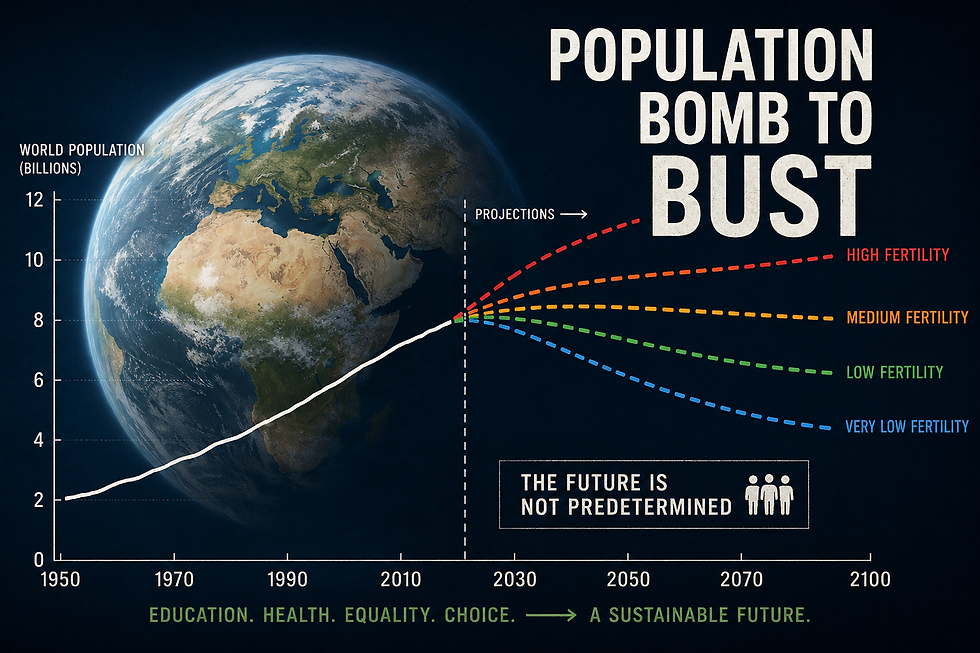
Radical optimism is not the belief that things will turn out well. It is the refusal to treat the future as already decided. The improvements Hans Rosling documents were not accidents. They were the result of sustained effort, political will, scientific advancement, and collective action applied over time. They demonstrate that human beings can change the conditions of their existence. But they do not guarantee that such progress will continue. History shows both advancement and regression, often unfolding at the same time.
Equally, the threats we now face, such as climate change, ecological degradation and political instability, will not resolve themselves. They are not external forces acting upon us, but the consequences of human systems, decisions and priorities. Left unattended, they will continue; left unchallenged, they will worsen. If progress is to continue, it will be because people choose to sustain and extend it.
This requires agency. We do not determine outcomes, nor can we act with certainty about what will follow. But neither are we without influence. Between inevitability and control lies a narrower space in which human action matters, albeit unevenly and imperfectly, but also consequentially.
Agency is not about doing anything. We are often encouraged to act where compliance is easiest, rather than where change is most effective. True agency lies in acting where change is possible. Individual actions often feel inconsequential because, at the level of global systems, they usually are.
Not all actions operate at the same level. Individual choices, while not meaningless, rarely address problems that are structural in nature. Meaningful change occurs when action connects, accumulates, and begins to operate at the level of systems: political, economic and social. It is here that small contributions cease to be isolated and begin to matter collectively.

The question, then, is not simply what we can do, but where our actions take effect, and how they relate to others. Agency, in this sense, is personal and relational. It emerges through participation in institutions and communities, and in the shared processes through which societies organise themselves.
To act without guarantees is not to act blindly. It is to recognise both the limits of our control and the reality of our influence, and to place effort accordingly. It is to accept that outcomes are uncertain, while also accepting that inaction carries its own consequences.
With this in mind, radical optimism requires responsibility. There is no guarantee that things will improve or that our efforts will succeed, but the future remains open, and its direction is not independent of us. It will be shaped by what people are willing to do, and do together. It demands that we accept responsibility without assurance.
The improvements Rosling documents required collective action. There is no reason to assume such progress will continue without similar commitment now. Issues which are the product of human systems will persist without human intervention.
Humanism does not prescribe a single political ideology, but it does narrow the field. If human welfare, dignity and flourishing matter, then systems that undermine them become open to challenge. To accept that the future is not fixed is also to accept that it is shaped through structures: laws, institutions, economies and cultural norms.
Acting, therefore, cannot remain purely individual. It must become collective and political. Radical optimism does not promise that things will improve – it can’t. It insists only that inaction is a choice with consequences. To act without guarantees is the only position that takes both evidence and uncertainty seriously. We have a responsibility to participate.
If the future is not fixed, then it is not yet lost. But neither is it secured.
That depends on us.


Your article certainly made me recosnider a few things in my life. Thank you.
Very thought provoking piece. There’s some interesting psychological research on resilience that aligns with a lot of what is said here 😊