
Learning how to change our minds and why it matters to humanists
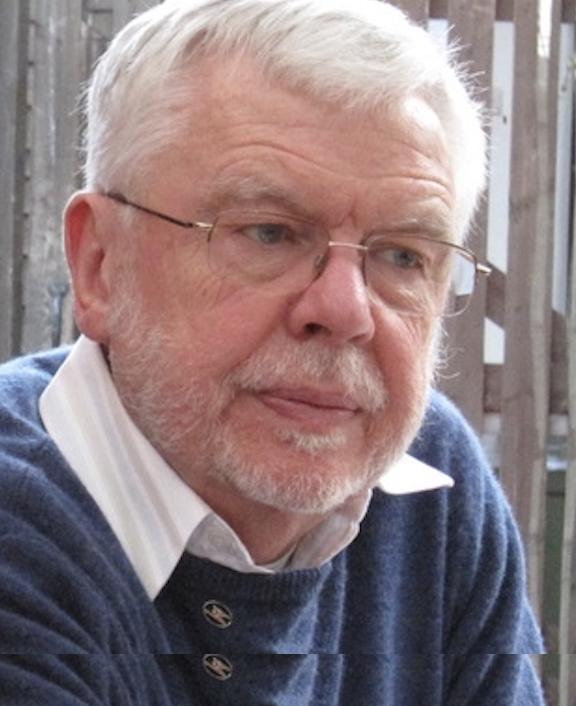

By David McKnight
Humanists rightly value reason, evidence and critical thinking. But are these enough on their own? Drawing on recent neuroscience and a lifetime's experience in science education, David McKnight argues that perhaps the greatest challenge is not learning new facts but developing the capacity to rethink our assumptions. If humanism is to flourish, it must become not only a movement of reason but a movement of continual learning and adaptation.
David is a retired science teacher and a Nuffield Chemist. He has a BSc Honours degree in Metallurgy and a Master’s degree in Education from Reading University.
One of the qualities I have always admired in science is that it expects us to change our minds.
Scientists form hypotheses, test them against evidence, discard those that fail and improve those that survive. It is a process that values curiosity over certainty and learning over pride. Although this seems obvious, I have come to believe that it has implications far beyond the laboratory.
Humanists often describe themselves as people who value reason, evidence and critical thinking. I certainly do. But over many years of teaching science and working within the humanist movement, I have gradually come to think that there is another quality which deserves equal attention: the willingness to remain open to change.
Many intelligent people struggle to do this. Once we have invested ourselves in a particular viewpoint, our natural tendency is to defend it. We look for evidence that confirms what we already believe and overlook information that challenges it. Psychologists have studied this tendency for many years, but recent work in neuroscience has helped explain why it happens.

One researcher whose work I have found particularly thought-provoking is Dr Beau Lotto. His central insight is that our brains evolved not simply to discover objective truth but also to help us survive. Faced with uncertainty, they often become more cautious and more defensive. Yet uncertainty is precisely where learning begins.
This led me to ask a different question. Instead of asking, “How do people change?”, perhaps we should ask, “How do people become capable of changing?” Lotto summarises his approach in five simple ideas: celebrate uncertainty, adapt to change, remain open to possibilities, cooperate with others, and discover genuine motivation from within. None of these ideas is especially complicated, yet together they describe the habits of mind that allow learning to continue throughout life. As a teacher, I found this deeply encouraging.
The most successful learners were not always the cleverest. They were often those who were prepared to have a go, make mistakes, ask questions and keep trying. Confidence grows through experience rather than certainty. In this sense, education is not merely about transferring knowledge from teacher to pupil. Its purpose is to help every learner become increasingly capable of working things out for themselves – recognising the important variables in any problem, testing ideas and finding better solutions.

For example, suppose a bicycle begins to wobble. The first instinct is often to jump to a solution: tighten the handlebars. A better thinker first asks, “What are all the possible causes?” Tyre pressure, loose spokes, wheel alignment, the saddle, even the rider could all be contributing factors. Only after identifying the important variables do we begin testing possible explanations and discovering which solution actually works.
This habit of mind has important implications for humanism. Humanism is sometimes presented mainly as a collection of conclusions: we accept evolution, we value science, we reject superstition, we support secular democracy. I agree with all these positions. But perhaps the deeper humanist commitment is to the process by which we reach them. Take evolution for example. The humanist response is not, “I believe it because that's what humanists believe”. Rather, our response should be: “Why do we believe in evolution? What's the evidence? Are there better explanations?” The conclusion matters, but so does the way we arrive at it.
Science is not merely a body of knowledge. It is a way of approaching the world with curiosity, humility and a willingness to revise our beliefs when better evidence appears. Those are not just the qualities of a good scientist. They are also the qualities of a lifelong learner. This attitude can enrich everyday life, our relationships, our politics and our education. It encourages us to ask better questions, to listen more carefully and to distinguish between confidence and certainty.
In schools, this might mean creating more opportunities for pupils to investigate questions for themselves rather than simply memorising answers. It means encouraging curiosity rather than fear of failure and helping learners understand that mistakes are often the beginning of genuine understanding.
The same principle applies within organisations. Over many years I have been involved with Humanists UK and with Humanists4Science, a small volunteer initiative that sought to encourage greater public engagement with science. Like many voluntary projects, it has depended heavily upon the enthusiasm of a few committed individuals. As I now begin to step back, I find myself reflecting on a simple truth. No project can depend indefinitely upon one person. Ideas flourish only when they are shared, adapted and carried forward by others. If Humanists4Science has achieved anything, I hope it has been to encourage people to think more scientifically, more independently and more confidently about the world around them.
Humanism has always encouraged us to think for ourselves. Perhaps the next step is to become equally committed to learning how to change our minds. After all, the future will not belong to those who are most certain. It will belong to those who remain curious long enough to keep learning.
Further information
Humanists4Science Facebook group


Comments